CALL: +61 414 961 122
GREG WHEELER CONSULTING

That is where many people first used it, but it is not where the biggest business opportunity sits.
The practical question for business leaders is now:
What can AI do today, what should we control carefully, and what is coming next?
The answer is more grounded than the headlines suggest. Strong AI models are already capable of supporting real business workflows. The issue is no longer whether AI will eventually become useful – it is whether organisations can redesign workflows in a controlled way to capture value from AI.
McKinsey’s 2025 global AI survey found that 88% of organisations are already using AI in at least one business function, but only around 35% have begun scaling AI across the enterprise.[1]
That gap matters.
Many businesses are experimenting with AI, but far fewer are embedding it into the way work is actually done.
High-end AI models already contain strong general and domain knowledge. For many business use cases, the best first step is not training a custom model.
The better first step is to take an existing workflow and give the AI the right business context: documents, rules, examples, decision criteria, templates and constraints.
For example, in procurement, AI can help clarify business requirements, refine selection criteria, run a market scan, pre-qualify suppliers, compare options and prepare a structured shortlist for review.
In operations, AI can review forms, emails, photos or reports, identify inconsistencies, draft standardised responses and flag exceptions.
In finance, AI can compare supporting evidence against policies, contracts or approval rules, then prepare a structured explanation for human review.
The point is not to replace expert judgement. It is to shift the first pass from the expert to the system, so experienced people spend less time reading, copying, checking and summarising.
This is where the immediate value sits.
Not in broad AI strategies.
Not in giving everyone another generic tool.
But in choosing one workflow that is slow, repetitive or inconsistent, and testing whether AI can make it faster, cleaner and easier to manage.
AI can produce strong outputs, but strong output does not mean the result is correct.
If the context is incomplete, the source material is poor, or the instructions are ambiguous, the AI may still make assumptions that sound confident but are wrong.
A sensible AI workflow should include:
This is especially important where the output affects customers, compliance, pricing, safety, financial decisions or professional judgement.
AI should not be treated as magic. It should be treated as a powerful system component that needs design, governance and quality control.
The economics of AI are improving quickly.
Stanford’s 2025 AI Index reported that the inference cost for a system performing at GPT-3.5 level fell by more than 280-fold between November 2022 and October 2024.[2]
That is significant. It means AI-enabled workflows are becoming more commercially practical.
However, falling costs do not remove the need for cost control. As AI becomes embedded in business processes, token usage, model selection, data volume and frequency of use will matter.
A workflow that runs occasionally may be cheap. A workflow that runs thousands of times a day, reads large documents, processes images or reviews video may need more careful design.
The goal is not just to use the strongest model for everything. The goal is to use the right model, with the right context, for the right task.
Video will make AI far more useful in industries where evidence and context matter.
Static photos only show what someone chose to photograph. Video can capture the full walkthrough, the surrounding context and details that may not have been noticed at the time.
Take a rental or maintenance inspection.
Today, someone may walk through a property, take selected photos and write notes. The report depends on what they saw, what they remembered and what they decided to capture.
With video, the process can be different.
A person could record a walkthrough of the property. AI could compare it with a previous video, identify visible changes, flag possible damage, describe room-by-room issues and prepare a draft report for review.
This is the rationale behind Rentegrity, built as part of Propertise AI Group: richer evidence, AI-assisted comparison and human-reviewed reporting.
The same concept applies beyond property. There are obvious use cases across insurance, construction, facilities management, maintenance and inspections.
The person still matters. But the evidence base becomes much richer.
AI has already changed digital work. The next major shift is physical work.
Robotics has existed for a long time, but it has been limited by cost, vision, processing power, software and the difficulty of working safely in unpredictable environments.
Those barriers are reducing.
Better vision models, cheaper processing and stronger AI reasoning will make robotics more useful in industries that rely on skilled labour, repetitive physical tasks, logistics, manufacturing, agriculture, health support, construction and maintenance.
This will not replace skilled workers overnight. Physical work is complex, messy and safety-critical.
But the direction is clear.
AI will move from screens into the physical world. First it will assist. Then it will complete narrow tasks. Over time, it will become part of how physical work is planned, monitored and delivered.
Embedding AI into an organisation is still a software development exercise.
The model is only one part of the solution. The real value comes from how it is connected to the workflow:
This is good news.
Because software development itself has become more efficient, building a small AI-enabled workflow is no longer the major undertaking many businesses assume it to be.
A practical AI trial can often be built around an existing process, using existing documents, forms, emails, images, videos or systems.
It does not need to automate everything.
It needs to prove whether one process can be made faster, more consistent and easier to manage.
The larger risk may not be that your current competitors move first. Many of them are likely moving cautiously as well.
The larger risk is a new entrant.
A new business does not need to protect the way things have always been done. It can design its operating model around AI from day one. It can use lower costs, faster turnaround and simpler processes to compete on price and win market share.
That is the decision point.
Do you want to use AI to improve how your organisation works, or wait until a leaner competitor uses it to put pressure on your margins?
The sensible first step is not a large transformation program.
It is one controlled workflow trial.
Pick a process. Build the AI input, output and review points. Keep people in control. Measure the result. Then decide what to do next.
Written by Paul Clark, Founder of Propertise AI Group


January 14, 2026
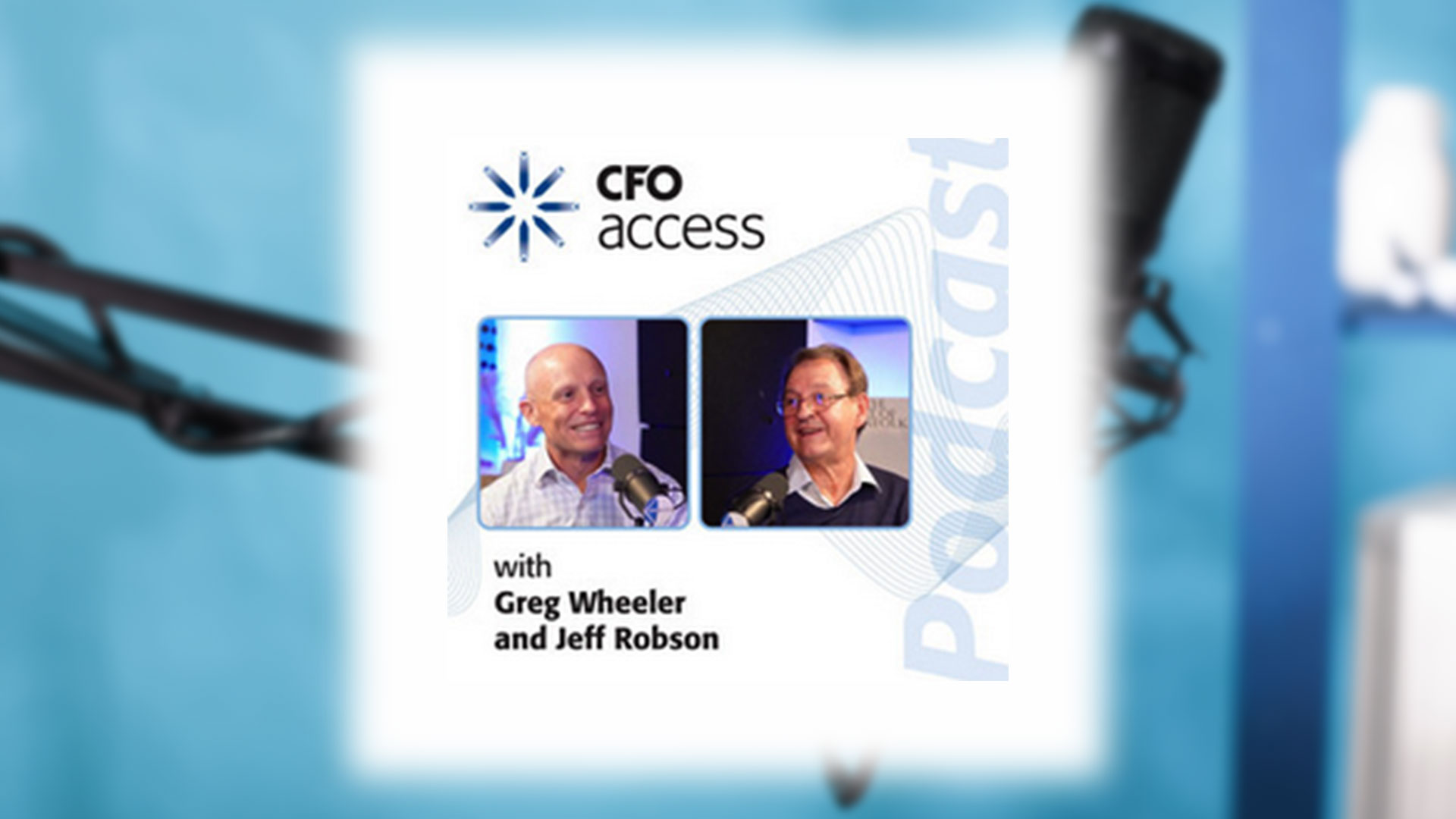
Greg Wheeler discusses leadership, culture, and the evolving role of CFOs in a candid conversation on the CFO Access Podcast with Jeff Robson.
read moreJuly 23, 2025
Discover the essential steps for starting a business in Perth with a structured checklist designed to validate your idea, secure funding, and ensure compliance.
read more
July 22, 2025
By offering independent, expert advice, management consultants can help businesses streamline processes, create growth strategies, and uncover opportunities that might otherwise go unnoticed.
read more
June 24, 2025
Greg deep dives into a more holistic overview on the importance of having a business plan, particularly in 2025; helping businesses work through the complexities of entrepreneurship.
read more
January 7, 2025
Discover practical strategies for business growth in 2025, as Greg shares how to navigate challenges, identify opportunities and prepare your business for sustainable success.
read more
December 2, 2024
We explore how a business consultant can help unlock the potential of Perth Start-ups, from expert guidance through to operational efficiencies and risk manaagement.
read more